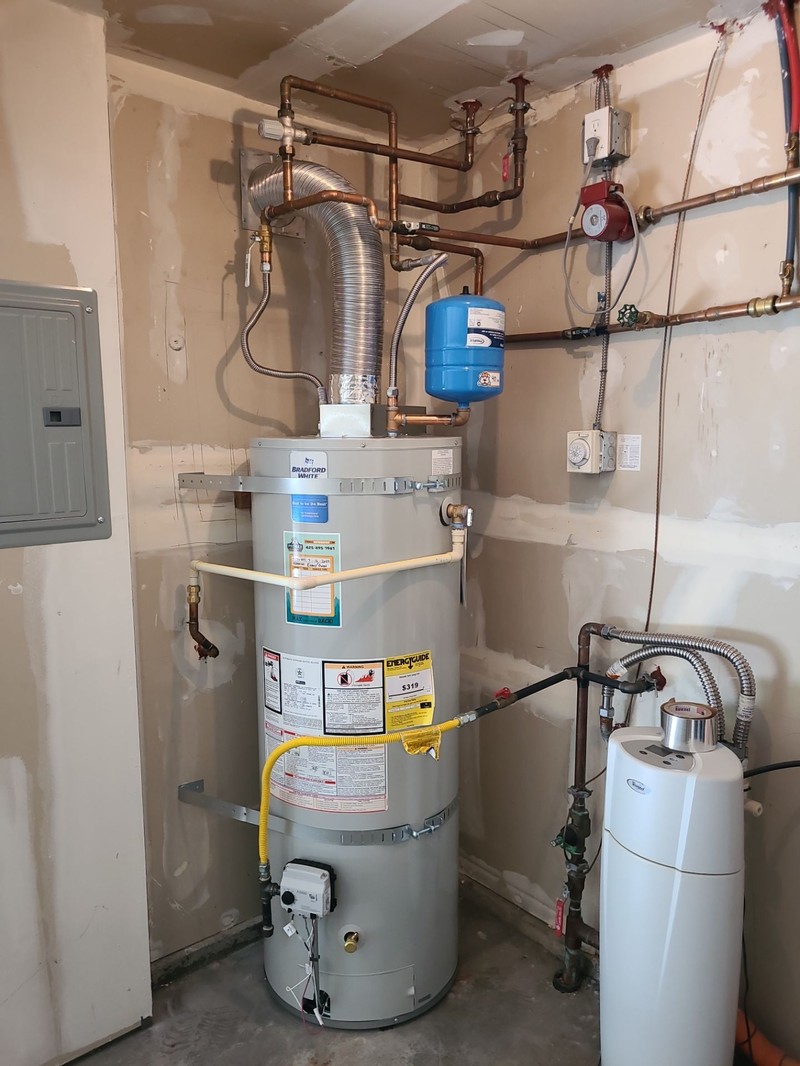
When considering water heater installation, choosing between a tank and a tankless system is an important decision that affects both initial costs and long-term efficiency. Traditional tank water heaters store a large volume of hot water in an insulated tank, typically ranging from 30 to 80 gallons. These units constantly maintain the stored water at a set temperature, ensuring immediate availability but also consuming energy continuously to keep the water heated. Installation of a tank water heater is generally straightforward because these units are widely used and compatible with most existing plumbing setups. They require space for the unit itself as well as clearance around it for maintenance access.
Tankless water heaters, on the other hand, heat water on demand without storing it in a reservoir. When you turn on the tap, cold water flows through heating elements or gas burners inside the unit, providing hot water instantly. This design eliminates standby energy loss associated with tanks since no heat is wasted maintaining stored hot water when not in use. Installation of tankless systems can be more complex due to their compact size and specific requirements such as higher power supply ratings or upgraded gas lines to handle rapid heating demands. Additionally, professional drain cleaning assessment may be necessary to determine if your home’s electrical or gas infrastructure can support this type of system efficiently.
In terms of space utilization, tankless models offer significant advantages by occupying less room than bulky storage tanks. This makes them ideal for smaller homes or areas where maximizing available space is critical. However, because they deliver hot water only at the rate they can heat it instantly-often measured in gallons per minute-multiple units might be needed for larger households with simultaneous high demand.
Cost considerations also differ between these two options during installation and operation phases. Tank heaters usually have lower upfront costs but tend to incur higher utility bills over time due to continuous heating cycles even when no hot water is being used. Conversely, while installing a tankless heater involves greater initial investment including potential upgrades to electrical or gas connections, its operational efficiency often results in reduced monthly energy expenses.
Maintenance requirements vary slightly; traditional tanks need periodic flushing to remove sediment buildup that can reduce efficiency and shorten lifespan whereas tankless systems require less frequent servicing but must still be inspected regularly for scale accumulation especially in hard-water areas.
Ultimately, selecting between tank versus tankless installation depends on individual household needs such as budget constraints, available space, desired energy savings, and daily hot water consumption patterns. Consulting with experienced professionals ensures proper sizing and compatibility with existing infrastructure which helps optimize performance regardless of choice made between these two popular types of residential water heaters.
Service Squad
680 E Colorado Blvd, Suite 180, Pasadena, CA 91101
626-333-6519