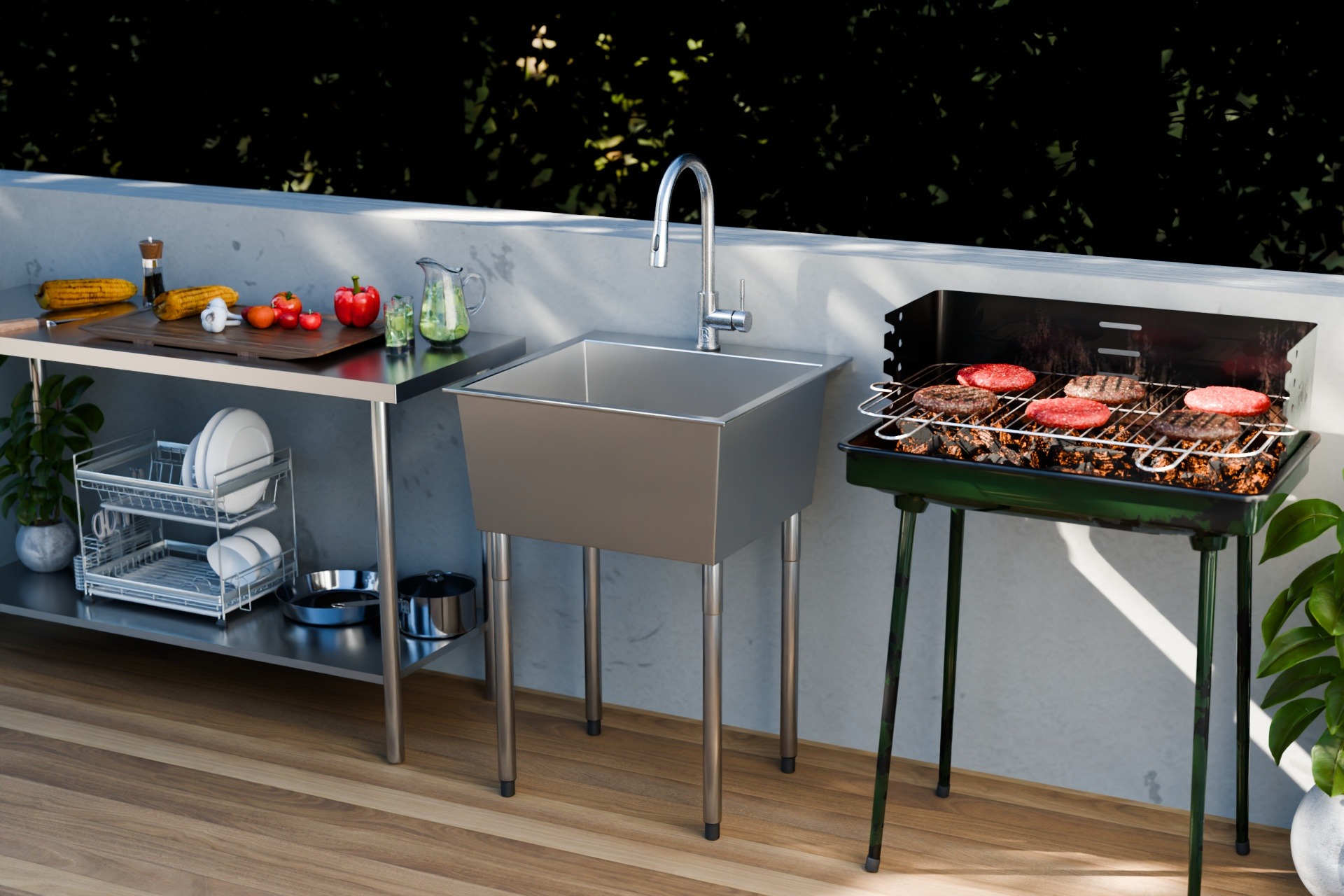
A commercial kitchen sink is an essential component in any professional food preparation environment, designed to meet the rigorous demands of high-volume cooking and cleaning. Unlike residential sinks, commercial ones are built for durability, efficiency, and compliance with health regulations. When selecting a commercial kitchen sink, it is important to consider factors such as size, material, configuration, and functionality to ensure it meets the specific needs of your establishment.
The size of a commercial kitchen sink plays a critical role in its effectiveness. Larger sinks with multiple compartments allow for simultaneous washing, rinsing, and sanitizing processes that are vital in busy kitchens. Typically available in single-, double-, or triple-basin models, these sinks help streamline workflow by providing dedicated spaces for different tasks. The depth of the basins also matters; deeper basins can accommodate large pots and pans more easily without splashing water outside the sink area.
Material choice significantly impacts both longevity and maintenance requirements. Stainless steel is the most common material used due to its resistance to corrosion, ease of cleaning, and ability to withstand heavy use over time. High-grade stainless steel with a thickness between 16-18 gauge offers optimal strength without being excessively heavy or expensive. Other materials like cast iron coated with enamel may be found but are less prevalent because they tend to chip or stain under constant use.
The configuration of faucets and drainboards adds further convenience in commercial settings. Many sinks come equipped with pre-rinse faucets featuring flexible hoses that allow workers to rinse dishes quickly before loading them into dishwashers or hand-washing stations. Integrated drainboards provide space for drying utensils while keeping countertops clear from excess moisture.
Installation considerations include whether the sink will be wall-mounted or part of a larger workstation unit that includes storage shelves beneath for cleaning supplies or extra equipment. Proper drainage systems must comply with local plumbing codes and health department standards; this often involves installing grease traps or interceptors nearby to prevent clogging caused by food debris.
Maintenance routines should focus on regular cleaning using non-abrasive detergents suitable for stainless steel surfaces along with periodic inspections of seals around basins and faucet connections to avoid leaks that could cause water damage over time.
In summary, choosing the right Commercial Sink requires understanding operational demands alongside regulatory guidelines governing sanitation practices within food service establishments. By carefully evaluating size options, construction materials, functional features like faucets and drainboards plus installation requirements tailored toward hygiene standards one can select an efficient solution that enhances productivity while ensuring compliance throughout daily operations.